
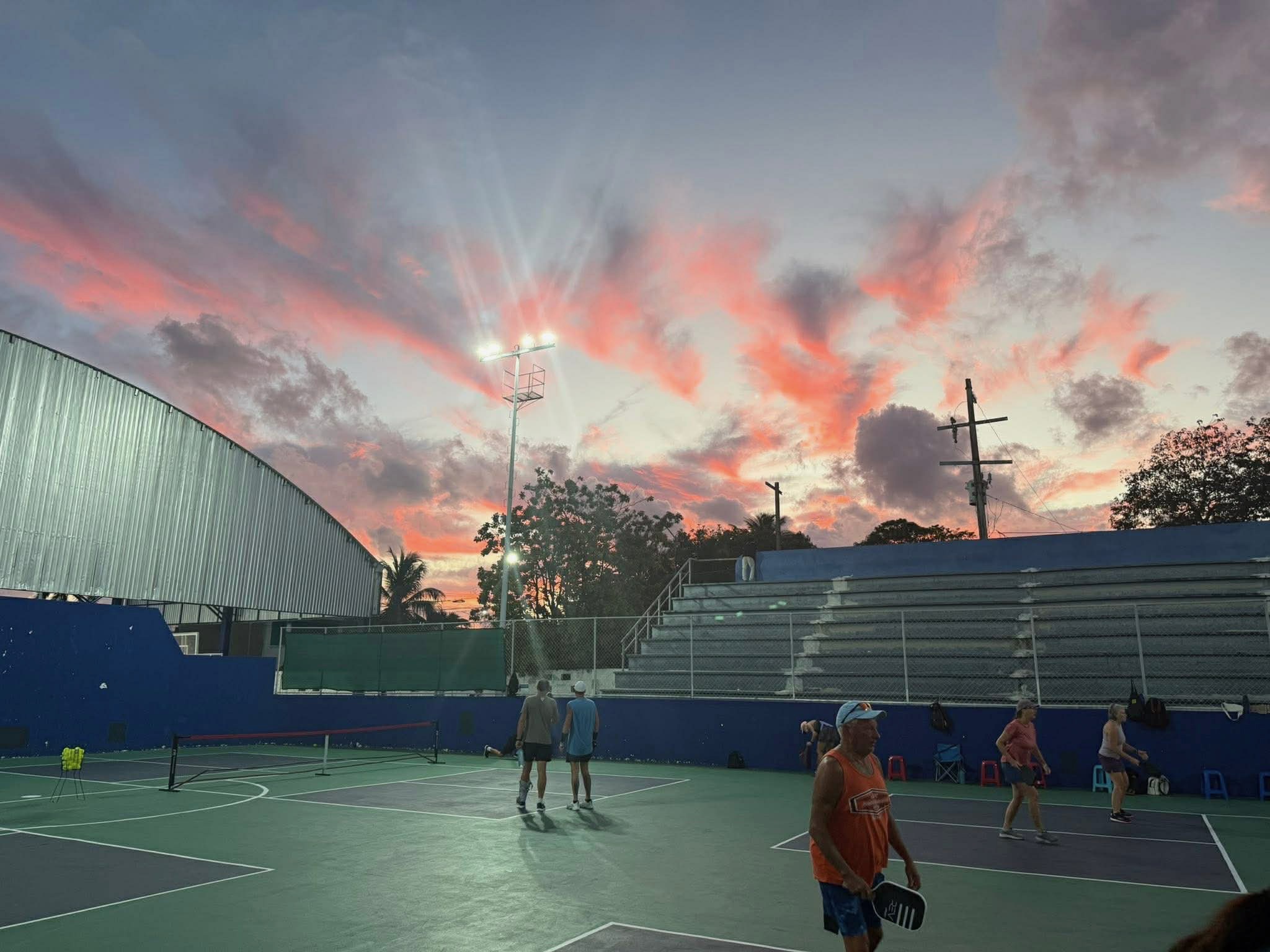
The following transcription is an interview with Jeffrey Blake, one of the leaders of the pickleball community in Playa del Carmen, Mexico. What’s unique about this pickleball group? Well, they are incredibly multicultural, having players from over 40 countries and multiple languages spoken on the court. In addition to this international attitude, the Playa del Carmen Pickleball Club firmly believes in supporting each other out off the court too.
And even though Jeffrey is very humble, you’ll see that he is very responsible for the growth and prosperity of Playa del Carmen’s pickleball. Read more below about the incredible story behind Jeffrey’s involvement in pickleball as well as the community aspect.
Jeffrey: So, I moved down here about six years ago during the pandemic and retired. And we were looking for things to do at the time. So we joined a beach volleyball group and one day a Canadian guy named John Dobos put out a post: Anybody want to play pickleball? And I’d never really played before but I was looking for things to do in the morning. So about eight of us got together and built a little court on a basketball court at a hotel. We showed up with a net and a couple paddles and we started playing pickleball.
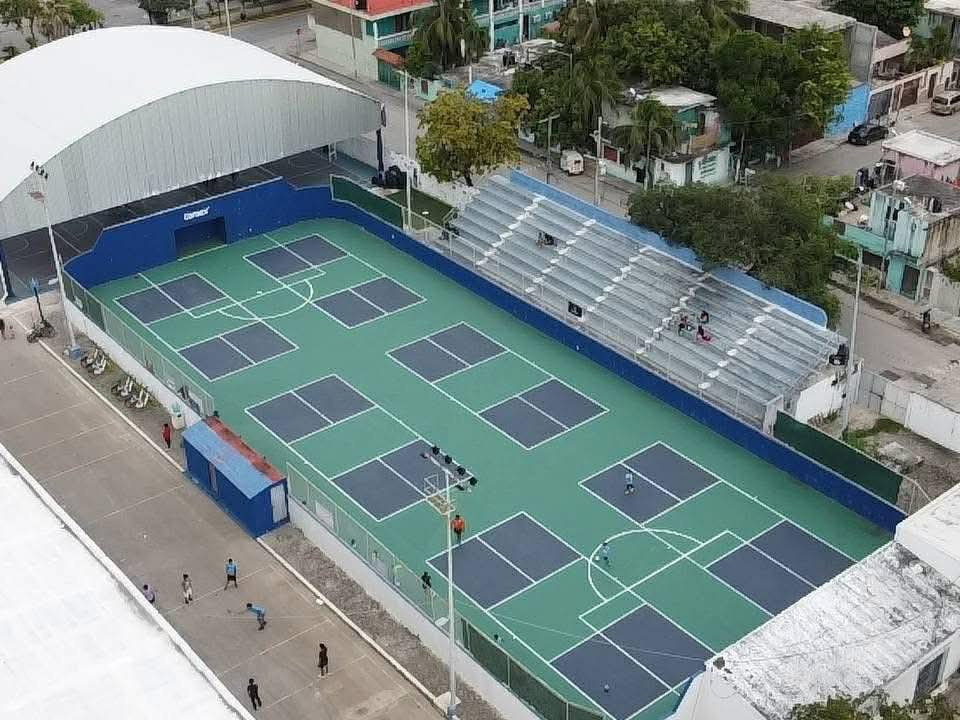
Then they started talking to their friends because they were very big in the pickleball community in Canada. And we started getting a few more players, a few more players, and so we moved to a sports authority called Polyforum. And in Polyforum, they’ve got football fields, they’ve got a gymnasium, basketball courts, a velodrome for rollerblading and stuff like that. But they didn’t have a dedicated pickleball spot, which we still don’t. We had to tape lines every day and we built four courts. We were buying equipment on Amazon and getting everything shipped here and the community started getting a little bigger and a little bigger.
The goal was to start a club for social interactions, for community, and to be a nonprofit club since the very beginning. About three years ago, we finally got permission to redo all the courts. We painted, we repaired all the concrete, we did everything ourselves. It was a big volunteer effort. So now we’ve put about 300,000 pesos into the courts. We have really nice courts that are painted blue. It’s a safe environment. And we’ve got a contract with the sports authority. We grew little by little. Now we’re sitting at 6,100 members from 40 different countries in our group.
Chloe: That’s so exciting. And it’s kind of crazy to think about, like you said, from the beginning when you guys were just playing on the basketball court, taping lines, that there are very few sports where people would go to these lengths to make it possible and make it fun and keep trying to build something. So I’m curious for you, why pickleball? What about it for you and the other members from the beginning made it something you really wanted to put a lot of time and effort into to grow?
Jeffrey: If you think about every sport, and I’ve played every sport you can think of, and I’ve lived in the Caribbean, I’ve lived in Hawaii, I’ve scuba dived, windsurfed, played football, basketball, baseball, all that stuff. There are always friendships that are built, but I’ve never seen a community built.
Since about three and a half years ago, every event that happens—birthdays, we just had a marriage proposal, we just had our first love connection with a guy from North Dakota and a girl from Canada that met on our courts and are now dating. Babies and grandbabies and everything is shared on our Facebook page. We average about 350,000 views a month on our page with about 30,000 interactions.
I’ve never seen a community that has grown as big as this one where people come back, one, because they love Playa, but two, because they like to come play pickleball. It just grew from there.
We started doing donations in the community. We help schools, people with medical issues, we do a big toy drive every year for underprivileged kids where we buy 150 toys each Christmas and bring them to the courts. We get all the players involved and donate toys.
This year, the boss that runs all the sports authorities took me to a Mayan village about two hours from here and we did a toy drive there. It’s a little village with no running water, barely any electricity, no windows and doors in a lot of the houses. They ring a church bell and all the families and kids come out to this playground. We brought toys and dry goods and hung out with the kids and gave them toys. The satisfaction you get doing this and giving back to your community and seeing how grateful people are—it’s wild.
The one trick I’ve learned in Latin America is that people are needy but they still have their self-respect. They don’t want it to come across like you’re doing something because you feel sorry for them. You’re doing something out of respect for being good people. So we pick and choose who we work with. We’ve worked with a civil protection school where the kids are under lock and key for protection. We’ve donated pickleball nets, paddles, cakes, cookies, toys. This is all stuff the Mexican government has invited us to go do.
Now people come to me and ask for help to do things. We sponsored a soccer trip to El Salvador for some kids that had never left the country. We donate to a lot of sports teams. We helped build a boxing club with equipment. We bought an air conditioner for somebody’s office one day just because they needed it. It adds up quickly.
For a special needs school, we went to Walmart and bought hygiene supplies so the kids could groom themselves like anyone else would expect in life.
It’s hard to describe how it happened. We don’t advertise. We’ve never looked for players. We’ve never said, “Hey, come play with us.” It just morphed into this thing that’s hard to describe until you come and actually play.
There was a birthday party the other day and 50 players showed up. They didn’t know each other three years ago. That’s the community we built.
There was a guy from Canada who’s a musician. He’s been entertaining some of the pickleball players at events. At a 72nd birthday party, there were 50 or 60 players there. When we find something worthwhile, we donate. We’re always looking for different things to help.
There was a minister who went to Uganda on a missionary trip and we donated paddles, balls, and nets. They sent back videos of them learning to play pickleball in Uganda. They even sent me a birthday video with kids singing “Happy Birthday Coach Jeff” in English from a tiny village.
I’ve gone through a lot of health issues in the past. I’ve died three times on the table from two heart attacks and I was in a massive car accident. I’ve flatlined three times. Since then, everything I’ve done has been with a purpose—how to create a group or community and how to give back.
I’m on the courts right now on my 97th day in a row, five hours a day. I do it volunteer. I don’t get paid. We set up every day, we break down every day. I don’t know of another club like us. Everybody else is typically profit-driven or has some ulterior motive. We just build. They come, we play, they donate, and then we go do good things. That’s what it is right now.
Chloe: That’s so special. It shows that pickleball is so much more than pickleball. It’s more than the game. I love hearing about how the club has a purpose off the court. Reaching 6,000 members from over 40 countries is incredible. I’m curious what that multicultural blend looks like.
Jeffrey: Right now we have a Nigerian dance teacher that helps me, his name is Yemi. We have an Italian restaurant owner from Rome where people celebrate events. We have a lady from New Jersey, Debra Tabassi, who helps with different things. There’s a young Scottish lady named Linnell who went through health issues and plays with us. There are a ton of French Canadians. The language spoken on our courts right now is French because they’re French Canadian.
We have Americans, Mexicans, Venezuelans, Brazilian players. We had a girl from the Egyptian pickleball world come play with us. We had our first pickleball pro come down and do clinics free of charge. We have a coach from Atlanta named Aaron Whitworth who helps with lessons.
Canadians are probably our biggest group, Americans second, Mexicans third. Then we get players from across Latin America. There’s a guy in Cuba teaching kids pickleball in the streets of Havana, but politically it’s not safe to do anything right now.
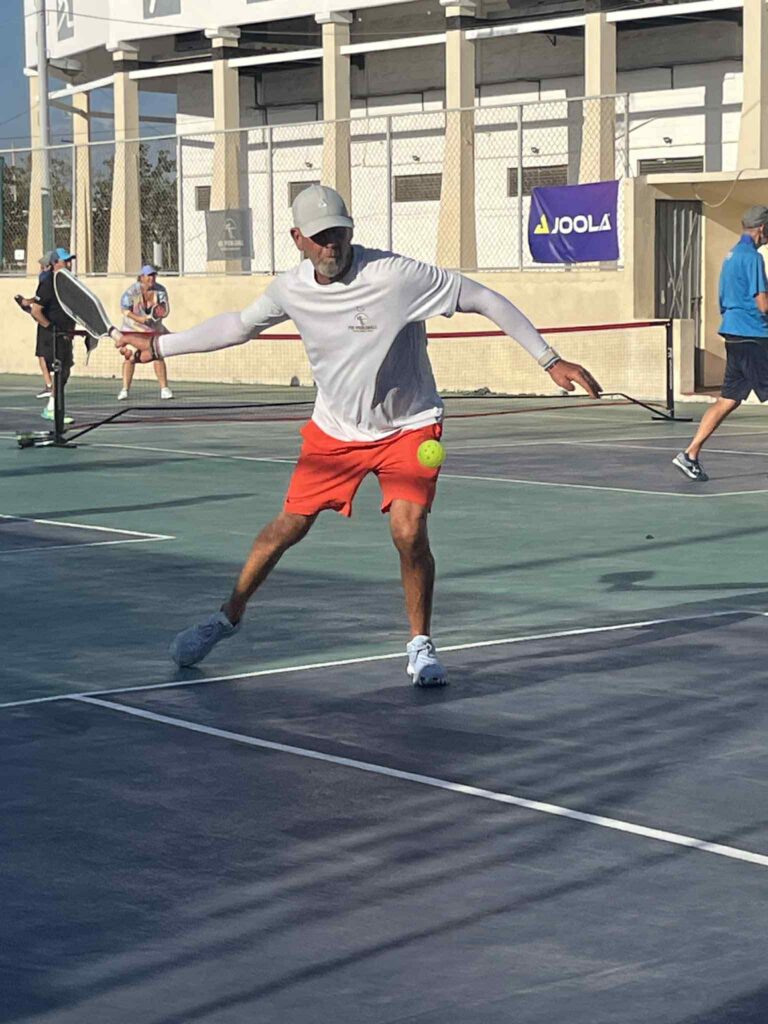
We have a sponsorship with Joola paddles. We signed our first contract with them last year to demo paddles and now we sell paddles for them. It’s complicated logistically getting them into Mexico because of import taxes, but we figured it out.
We’ve met guys running clubs all over Mexico. Every city now has a club. There’s a place called Heat Paddle and Pickleball that’s more dominant on the padel side. There’s a community in Port Aventuras with four courts. A French guy started a club in Puerto Morelos on basketball courts and they’ve got 2,000 people in their group. There’s another smaller club on CTM. There’s a beautiful club in Querétaro. There are clubs in Mazatlán, Mérida, Progreso, Guanajuato.
Now there’s a tournament circuit in Mexico. Clubs hold tournaments every other month. We do one big one a year, usually about 220 players, and everything is donated to charity.
We just started the Quintana Roo Pickleball Association last week to try to form a federation locally.
It’s just super cool.
Chloe: I love hearing all of this. I’m in Buenos Aires and the pickleball scene is starting to take off. It’s beautiful to see how it brings people together. What would your goals be for the upcoming year?
Jeffrey: I’m 63. I didn’t go past high school. The way my life works is I’ve always believed things happen the way they’re supposed to happen. If you don’t plan things, they happen the way they’re intended. It’s not religious. It’s energy.
Living in Latin America, people want the benefits—the beaches, hotels, food—but they don’t want to see the other side. If you open your eyes, you see a different world. If you choose to see it, opportunities come naturally.
That’s why I don’t have specific goals. If we built a club, now we’re paying rent and charging more and becoming a profit center. That would take away from what we’re doing. People come because they know what we do.
A gentleman in Mirabel outside Ontario played with us for four years, went back, and built 30 courts in two years. A gentleman named Chris Avalisi is opening the Gretzky Pickleball Club in Hamilton with the Gretzky family. They come play with us. A woman named Susan Paquette built a women’s club in Ontario inspired by what we do.
We’re probably one of the largest pickleball groups just from a following perspective. People say they’ve followed us for years before coming down.
We built a safe space. A young family sells fresh juices for us. We celebrated a quinceañera on our courts for a girl named Shadi. We sang happy birthday in Spanish, French, and English. We were her family that day. We’re thinking about sponsoring either Shadi or her brother Axel for university.
We helped a young guy named Raul expand his printing business. We’re going to sponsor an international dance night to help Yemi grow his dance business.
Our big thing every year is Christmas for kids.
Chloe: I love hearing all of this. It’s inspiring how organically it’s grown compared to for-profit clubs. All the work you’re doing, it creates a ripple effect.
Jeffrey: There’s a guy who just moved here from Mazatlán. Lucy at her Italian restaurant does musical bingo. Another lady does music trivia night. He wants to start musical poker and part of the proceeds will go to charity.
But with us, pickleball seems to be secondary. It’s why you come, but it’s not the fulfillment piece.
Leave a Reply